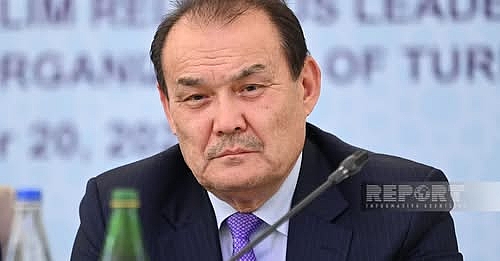
Turkic states are steadily deepening their multilateral economic partnership, with the practical implementation of joint investment initiatives and stronger regional integration serving as key drivers. Against the backdrop of growing mutual trade, expanding transport and logistics capabilities along the Middle Corridor, and the active adoption of digital technologies, business communities across the Turkic world are receiving a powerful incentive to pool their efforts. An important role in this process is played by the Turkic Investment Fund (TIF), which has built up capital of $600 million. This opens fundamentally new opportunities for long-term financing of major infrastructure, transport and industrial megaprojects.
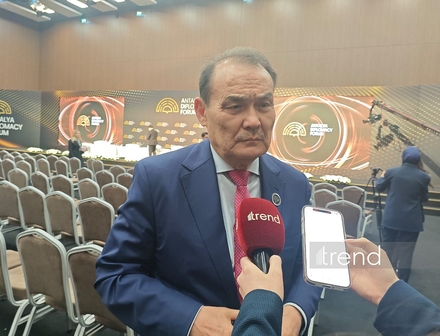
In an exclusive interview with Report, TIF President Baghdad Amreyev spoke about how the Fund is moving from the stage of institutional development to active financial operations, the sectoral priorities shaping its portfolio, as well as prospects for partnerships with leading global financial institutions and the countries of the Persian Gulf.
We present the interview to our readers:
- What are TIF's key institutional and operational priorities today? At what stage is the development of the Fund's internal mechanisms and investment infrastructure?
- During 2023 and 2024, our main task was to establish the institution. In 2025, we put in place the Fund"s main rules and systems for governance, investment, risk management, compliance and administration.
A financial institution earns credibility through the quality of its decisions. That means carefully assessing projects, managing risks and financial resources well, monitoring our investments properly, and maintaining strong independent controls.
We are also improving how we manage the Fund"s financial resources and risks. In April, TIF joined the World Bank Group Treasury"s Reserves Advisory and Management Partnership. Through this partnership, we can benefit from the World Bank"s experience in managing financial resources and risks.
At the same time, we have to build a good project pipeline. There can sometimes be pressure on a new institution to show results quickly. I understand that. I would rather see TIF finance a smaller number of good projects than rush to build a large portfolio.
For me, this is the next stage of institution building. We have created the framework. Now we have to prove that it delivers.
- As is known, the Turkic Investment Fund has already begun its financial operations. What does the first stage of the Fund's work show in terms of the financing model it has chosen, and what changes in the approach and scale of its activities should be expected going forward?
- At this stage, the Turkic Investment Fund (TIF) is mainly providing loans. We are working with established international financial institutions, financing projects alongside them where appropriate, and using local financial institutions to reach businesses.
The next step is to broaden the portfolio. We already have several operations under assessment in different member states and with different international partners. As these projects move forward, we want to expand our financing across all member states and more sectors without compromising the quality of our decisions.
Our priorities include infrastructure and connectivity, energy, transport and logistics, manufacturing, agriculture, MSMEs, digital infrastructure and financial services.
We are particularly to finance projects that strengthen economic links among our member states. We are particularly interested in investments that support cross-border trade, connectivity, regional value chains and the expansion of businesses across the Turkic countries.
- What mechanisms is TIF considering to increase its financial capacity? Can the Fund attract additional resources beyond the capital provided by member states, and what role will international partners play in this process?
- Our member states provide the financial foundation of TIF. They have subscribed $600 million in capital, and their commitment remains the basis of the institution.
But we should not think about TIF"s financial capacity only in terms of its own capital. If TIF puts $10 million into a good project and our participation helps bring another $40 million from established financial institutions, then our capital is producing much greater results. This is one of the main reasons why co-financing is so important to us.
That is why working with other international financial institutions is so important for us. It allows TIF to support projects much larger than we could finance alone.
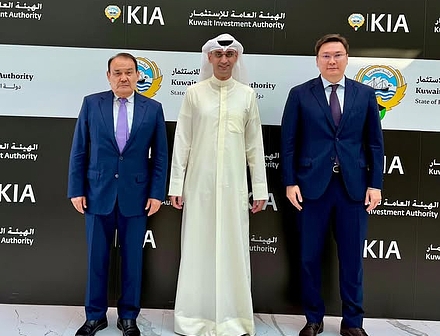
We are also expanding our discussions with state investment funds and development institutions from the Gulf. I have just completed a visit to Kuwait, where I met with the Kuwait Investment Authority, the Kuwait Fund for Arab Economic Development and the Arab Fund for Economic and Social Development. We discussed how we could finance projects together, attract investment into our member states, and develop closer cooperation with the Arab Coordination Group.
Earlier this year, we also held discussions in the Gulf with institutions such as the Qatar Investment Authority, Qatar Fund for Development and Saudi Fund for Development.
The next step is to identify a small number of projects that make economic sense for both sides. But I believe the Gulf can become an important source of long-term investment and development finance for the Turkic region.
So our financial strength will depend not only on TIF"s own resources, but also on how much additional investment we can bring into projects with our partners.
- At what stage is cooperation between the Turkic Investment Fund and the Islamic Development Bank (IsDB) Group? Are specific projects and co-financing mechanisms already being discussed?
- Our discussions with the IsDB Group have begun to yield concrete results. On 17 June 2026, TIF signed a Framework Agreement with the Islamic Corporation for the Development of the Private Sector (ICD), the private-sector development institution of the IsDB Group. The agreement created an Islamic co-financing program of up to $50 million. Through this program, selected local financial institutions can receive financing to support SMEs in our member states.
Our dialogue with the Islamic Development Bank itself also continues. We have discussed financing projects together, attracting additional funding, and sharing information on projects that may be suitable for both institutions. With the wider IsDB Group, we want to build cooperation around real projects rather than broad declarations.
- What role can Islamic financial instruments play in the long-term strategy of the Turkic Investment Fund? Is TIF considering expanding the range of such instruments as its activities develop?
- Our agreement with ICD already shows that Islamic finance is becoming part of TIF"s work. For us, Islamic finance is another useful way to finance suitable projects.
I do not see conventional finance and Islamic finance as competing approaches. We should use the structure that best fits the project, the market, and the needs of our member states.
As TIF develops, we may also use other forms of Islamic finance, including Sukuk, or Islamic bonds, to raise funding in the future. But our immediate focus is much simpler: use Islamic finance to channel real money to viable businesses and SMEs. That is more important at this stage than having a long list of financial products on paper.
- How, in your view, will cooperation between the Turkic Investment Fund and the European Bank for Reconstruction and Development (EBRD) develop? What areas could become priorities within this partnership?
- Our cooperation with the EBRD shows very clearly how we want to work with international financial institutions. We have already completed our first financing alongside the EBRD.
We are now taking that cooperation further. The TIF Board of Directors has endorsed a framework with the EBRD under which the two institutions can share financing and risk in selected private-sector projects. We see particularly good opportunities in private-sector financing, financial institutions and regional connectivity, where EBRD"s experience and TIF"s knowledge of the region can work well together.
- Does the Turkic Investment Fund plan to enter international capital markets within the next five years? What financing instruments could become relevant as the Fund develops?
- We should reach the capital markets at the right time. For a new international financial institution, issuing a bond should not be a matter of prestige. It should make financial sense and come only after TIF has built a strong financial position, sound governance, good risk management, and a proven record of financing projects.
That is why we are moving step by step. For now, we need to use our capital carefully, finance good projects, and build a strong record. As TIF gains experience, we can explore new ways to raise funds.
From 2030 onward, TIF envisages a more active role in international capital markets. This may include issuing bonds internationally and, where appropriate, raising funds in the currencies of our member states. Sustainable development bonds could also become relevant as our portfolio develops.
But capital markets are a means, not an objective in themselves. We should borrow because we have strong projects to finance and because borrowing can allow us to finance more good projects at a reasonable cost.
- What is the procedure for admitting new members to the Turkic Investment Fund? What conditions and criteria apply to states interested in joining, and how much of a priority is expanding the membership for TIF?
- The Fund was designed as an open international financial institution.
Today we have six member states: Azerbaijan, Hungary, Kazakhstan, the Kyrgyz Republic, Türkiye, and Uzbekistan.
The Establishment Agreement sets out the membership process. Participating countries of the Organization of Turkic States that are not founding members may join TIF by becoming parties to the Establishment Agreement. Other states may also become members on terms decided by the Board of Governors. Any new member must go through the procedures set out in the Establishment Agreement.
I do not think we should measure the success of TIF simply by the number of countries around the table. However, a new member can strengthen our capital base, expand economic links, bring new experience, and open additional opportunities for investment and trade.
Our priority today is to make TIF work well for its current members. If TIF performs well, I believe other countries will naturally become interested in joining.
- How does the Turkic Investment Fund assess the investment climate in its member states, and what factors, in your view, will determine its development over the next decade? What areas could become the main drivers of investment growth in the region?
- Our member states have strong potential, but investors are becoming more selective. Recent disruptions, especially those we have seen in 2026, have made one thing very clear. Investors are looking much more closely at transport routes, energy security, supply chains, and access to finance.
Take the Middle Corridor. Azerbaijan has a central role because it connects the Caspian with Türkiye and Europe. But the corridor should not be viewed simply as a railway or a route for moving containers from China to Europe.
For me, the more important question is what economic activity the corridor creates inside our countries. A successful corridor should attract logistics centers, storage facilities, manufacturing, agribusiness, processing, digital infrastructure, financial services and new private investment. It should help companies in one Turkic country reach markets and suppliers in another.
This also means that we have to address the weakest links. There is little benefit in building a faster railway or a better port if goods then spend hours waiting at the next border. Infrastructure, Caspian shipping, customs, digital documents, standards, finance and insurance all have to work together.
Technology will also shape the next decade. The Turkistan Summit of the Organization of Turkic States in May focused on artificial intelligence and digital development. TIF can support this agenda through financing. Our mandate already allows us to finance digital infrastructure and information technology. Over time, I see opportunities in data centers, high-speed connectivity, digital financial infrastructure, cybersecurity-related infrastructure, and technology services.
Green investment is another important area for us. Energy systems, transport, industrial production and access to export markets are changing. Our member states will need investment to remain competitive.
I also believe we should stop presenting the Turkic countries to international investors as unrelated country stories. Each economy is different, and each country remains sovereign. But international investors should increasingly see the opportunities created by a more connected Turkic region. TIF was created precisely to see those connections.
- How do you see the Turkic Investment Fund ten years from now in terms of its scale, financial sustainability, reputation and impact on the region's economic development? What results would you consider the main indicator of its success?
- In ten years, I want TIF to be a financial institution that people trust. Of course, I want the Fund to be larger and financially stronger. More importantly, to be able to finance larger regional projects and bring big investors into them.
But size alone is not my measure of success. I want TIF to become the institution that governments, businesses, and international financial partners think of when there is a serious project connecting the economies of the Turkic region.
I want people to be able to point to real examples and say: this financing helped a company expand into another member state; this investment removed a transport bottleneck; this project created a regional value chain; this partnership brought international capital into a project that otherwise might not have happened.
The $600 million subscribed by our member states gives us a strong starting point. In ten years, I expect TIF to have financial capacity measured in billions of dollars, financing many more projects and operating on a much larger scale across member states.
For many years, the Turkic countries worked to build a common institutional framework. I was part of that process during my years at the Organization of Turkic States. We created regular summit mechanisms, developed a long-term vision, and expanded the family of Turkic cooperation institutions.
The establishment of the Turkic Investment Fund was a natural next step because economic cooperation needed its own financial instrument. If TIF can help turn political confidence into investment, stronger businesses, better connectivity and more trade among our countries, then it will have fulfilled the purpose for which it was created.
That is the institution I want to see ten years from now.